









Carry-on luggage 2026: liquids & the 100 ml rule – where 2 L are already allowed
(As of: 20.08.2026)
The 100 ml rule is wobbling – but it has not fallen everywhere. At airports that have switched their security checks to modern CT scanners, travellers may now carry liquids in considerably larger containers. Italy is particularly far ahead: at Rome Fiumicino, liquids in containers of up to 2 litres are allowed; larger bottles may be taken through empty, full ones belong in checked baggage. Milan Linate and Malpensa Terminal 1 follow the same model, while Terminal 2 is sticking with 100 ml for now. This shows that even at the same airport, different rules can apply per terminal – a quick look at the terminal page before departure saves stress.
In Germany, many airports – including BER – are sticking with the classic 100 ml model and the 1-litre bag. There is still good news: where CT technology is already in operation, laptops and small liquid containers often no longer have to be unpacked, but the quantity limit remains in place until the airport officially relaxes it. In practice this means: shortly before you travel, check the baggage and security information of your departure terminal – and repeat this for the return flight, as it may follow different rules.
The background is a Europe-wide technology switch: now that the relevant CT solutions have been approved, airports can replace the 100 ml limit and allow larger liquid containers. This is happening step by step – depending on how quickly manufacturers deliver and airports upgrade. In short: the way is clear, and implementation is happening airport by airport.
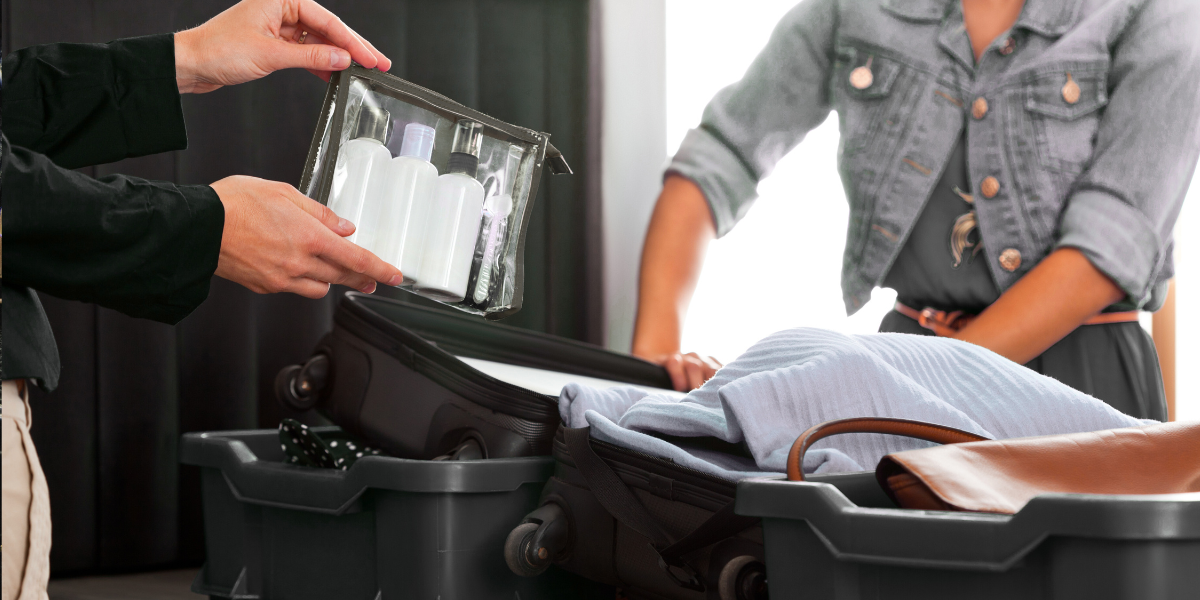
For you as a traveller this results in a simple packing strategy: if you are unsure or your outbound and return flights have different rules, pack conservatively. Fill your most important liquids into travel bottles of ≤ 100 ml and store everything in a leak-proof toiletry bag. Where 2-litre containers are already allowed, you benefit from less unpacking stress at security. Duty-free remains possible – keep the receipt in the sealed bag so there are no surprises when changing planes. Medicines and baby food are special cases that you may carry beyond the 100 ml limit with the appropriate proof.
Another lever for relaxed travel is the under-seat bag (“personal item”). Especially if you fly with carry-on luggage only, you save time and fees when the small bag is packed cleverly: documents, electronics, valuables – and the toiletry bag within easy reach. Ryanair allows 40 × 30 × 20 cm; other airlines differ. At the same time, Brussels is discussing EU-wide harmonisation (including a guaranteed personal item of 40 × 30 × 15 cmand a small free cabin bag of up to 100 cm total size/7 kg). Until this has been adopted and implemented, your airline’s rules apply.
Practical tips for security: put liquids at the front of your backpack and hard items at the back – this speeds up the visual check, no matter which rule applies. Secure lids with tape or put bottles into zip bags twice so that nothing leaks. A sturdy toiletry bag helps wherever “leave everything inside” is already possible. And don’t forget a luggage tag: if labels tear off, contact details on the outside are worth their weight in gold – especially with new processes at security.

FAQ – Liquids in carry-on luggage & the 2-litre rule
No. It only applies at EU airports or terminals with CT scanners. Many airports are sticking with 100 ml/1-litre bag. Check outbound and return flights separately.
On the website of your departure terminal. Search for “security check” or “liquids in carry-on luggage”. Rules may differ per terminal.
With the 100 ml rule, the container counts. A 150 ml tube is prohibited, even if only 50 ml is left inside. At 2 L terminals, the maximum volume set by the airport applies.
Under the 100 ml rule only empty, then refill it. At 2 L terminals, full bottles up to the limit are allowed. Check the rules for the return flight separately.
Yes. Anything creamy, gel-like or pasty (e.g. toothpaste, mascara, roll-on deodorant) falls under the liquids rule.
Yes, in small containers (≤ 100 ml under the 100 ml rule) and with a protective cap. Some airlines have additional limits.
Yes, in “reasonable quantities”. Bring a prescription/medical certificate and declare it at security.
Yes, in the quantity needed. You may be asked to show the containers.
Only carry purchases in the sealed STEB bag with the receipt and keep it closed until your final destination.
Often not. Follow the signs. Still pack your toiletry bag and electronics within reach in case security staff want to see them.
That varies by airline. Often 40 × 30 × 20 cm. EU harmonisation is being discussed; until then airline rules apply.
Usually yes, as the rule concerns the content. Refillable 100 ml bottles are the safest option.
Yes – provided your terminal has introduced the 2 L rule. Check the return flight separately.
Essentials in bottles of ≤ 100 ml. Buy large bottles at your destination or put them in checked baggage.
No. Powders and solid products are exempt. Note special rules on long-haul flights.
E-cigarettes go in carry-on luggage. Liquids count as liquids and are subject to the limits. Check your airline’s requirements.
Liquids at the front, secure the lids, pack twice in zip bags, keep the toiletry bag within reach.
They count as liquids. 100 ml per container, unless the 2 L rule applies. Keep duty-free sealed in the STEB bag.