









In 2026, China is easier to travel to from the EU than it has been in a long time – no visa, short application forms, direct flights. And yet there are a few things you need to know before you set off. Those who arrive at the airport unprepared risk delays at border control or problems at check-in. What you really need, what has changed in 2026 and what to particularly watch out for – here is the complete overview.
Do You Need a Visa?
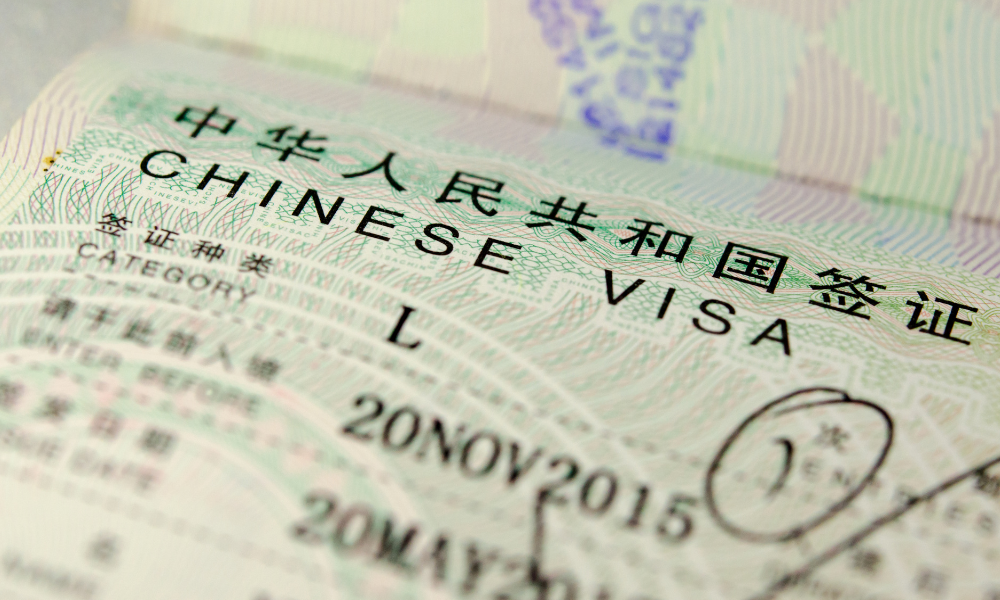
The good news first: as a national of Germany, France, Spain, the Netherlands and many other EU countries, you do not need a visa for China for stays of up to 30 days. Visa-free entry applies to tourism, business travel, family visits, academic exchange and transit – and has currently been extended until 31 December 2026. In total, citizens from more than 50 countries benefit from this arrangement.
Important: the exception applies only to a standard passport. Anyone travelling on a service passport, provisional passport or a travel document as a passport substitute still needs a visa. And anyone who wants to stay longer than 30 days, or work or study in China, must also apply for a visa in advance.
What You Need for Entry
Three things determine whether you can enter without any problems or get held up at the gate:
- Passport – must be valid for the entire duration of your trip. For visa-free entry, validity for the planned stay is sufficient. When entering with a visa, it must still be valid for at least 6 months.
- Return or onward flight ticket – you should be able to prove that you will leave within 30 days.
- Digital Arrival Card – new since 2025/26, mandatory for all travellers entering China (more on this below).
New in 2026: The Digital Arrival Card
What used to be a paper form at the airport has been digital since November 2025. The so-called Arrival Card – i.e. the entry declaration – must now be filled in online before entering China. This can be done via the official portal of the Chinese immigration authority (NIA), via the WeChat mini-programme or via Alipay.
Our tip: fill in the card up to 6 days before your flight and save the generated QR code as a screenshot on your smartphone. This way you are independent of the airport Wi-Fi at border control. Anyone who has not yet filled in the form at the airport can do so at a self-service kiosk – but this takes time.
Registration Requirement After Entry
Even if you enter visa-free, there is an important requirement: you must register with the responsible Public Security Bureau (Entry-Exit Administration) within 24 hours of arrival. Anyone staying in a hotel does not need to worry about this – the hotel does it automatically at check-in. Those staying in private accommodation must carry out the registration themselves.
Caution with private accommodation
Customs: What Can You Bring?
For personal use, you can import most everyday items duty-free. However, quantity limits apply to some categories – and some items are completely prohibited.
Duty-Free Allowances
- Alcohol: up to 1,500 ml (from 12% vol.) duty-free
- Cigarettes: up to 500 g duty-free
- Cash: up to 5,000 USD (or equivalent) without declaration; amounts above this must be declared
- Personal-use goods: up to a value of 2,000 RMB duty-free (for non-residents)
What Is Prohibited
- Drugs of any kind
- Weapons, ammunition, stun guns, pepper spray
- Products from protected animals or plants
- Politically sensitive printed material, media or files
- Lighters and matches – prohibited in both hand and checked luggage on all flights
- Antiques without authorisation (China has been a UNESCO signatory for the protection of cultural property since 1989)
Special Rules for Electronics
Batteries and rechargeable batteries – for example for cameras or power banks – may only be transported in hand luggage, not in checked baggage. Power banks must not exceed a capacity of 20,000 mAh. Liquid medicines may be taken on board after inspection – best packed together with the prescription or a doctor's letter.
Payment, Internet & More – What to Sort Out Before You Fly
China is digital – and in a way that sometimes surprises Europeans. Cash plays an increasingly minor role in everyday life, while the apps Alipay and WeChat Pay dominate. European debit cards do not generally work in China. You need to link Alipay to a Visa or Mastercard credit card – best done at home before you fly. Also inform your bank about your trip so that the card is not blocked due to unusual activity abroad.
And then there is the "Great Firewall": Google, WhatsApp, Instagram and many other services are blocked in China. An eSIM with a roaming function is the simplest solution – data traffic is routed via abroad and you can continue to use your usual apps. Alternatively there are VPN services – their use is officially prohibited in China, but no cases are known to date in which foreigners have been prosecuted for this. The risk is yours.
Sockets in China are mostly type A, I or occasionally C with 220 V / 50 Hz – so a universal travel adapter is an absolute must in your luggage.
Checklist: How to Prepare for Your Trip to China
- Passport valid for the entire trip – and at least 6 months when entering with a visa
- Return or onward flight ticket ready
- Digital Arrival Card completed and QR code saved as screenshot (possible up to 6 days before departure)
- For private accommodation: note registration requirement within 24 hours
- Alipay set up with Visa or Mastercard – bank informed about the trip
- eSIM or SIM with roaming installed and tested
- Offline maps, hotel addresses and booking confirmations saved as screenshots
- Universal travel adapter packed
- Batteries and rechargeable batteries in hand luggage – not in checked baggage
- Prescription medicines packed with prescription or doctor's letter
- Lighter and matches left at home
FAQ – Entry to China 2026
In most cases no. Citizens from Germany, France, Spain and many other EU countries can enter visa-free for up to 30 days until 31 December 2026. The arrangement applies to tourism, business travel, family visits and transit. Anyone who wants to stay longer or work needs a visa.
The Arrival Card is the digital entry declaration that has been mandatory since November 2025. You can fill it in online up to 6 days before your flight via the NIA portal, WeChat or Alipay. Save the generated QR code as a screenshot – it will be scanned at border control.
Yes. Within 24 hours of entry you must register with the Public Security Bureau. Anyone staying in a hotel does not need to do this themselves – the hotel handles registration automatically. For private accommodation (e.g. Airbnb or with friends), you are responsible yourself.
Generally not. European debit cards are rarely accepted in China. Alipay or WeChat Pay are the main payment methods – both can be linked to a Visa or Mastercard credit card. Best to set this up at home before departure and inform your bank about the trip.
Not without assistance. Google, WhatsApp, Instagram and many other services are blocked in China. An eSIM with a roaming function is the simplest solution – data traffic runs via abroad and you can continue to use your usual apps.
Prohibited items include drugs, weapons, stun guns, pepper spray, politically sensitive media and lighters (including in checked luggage). Batteries and power banks may only be carried in hand luggage. For prescription medicines, it is best to bring your prescription or a doctor's letter.
For personal use you may bring in up to 1,500 ml of alcohol (from 12% vol.), up to 500 g of cigarettes and up to 5,000 USD cash without declaration. Personal-use goods up to a value of 2,000 RMB are duty-free. Power banks must not exceed 20,000 mAh and must go in hand luggage.
Sockets in China are mostly type A, I or occasionally C with 220 V / 50 Hz. A universal travel adapter is an absolute must – many European electronic devices will not work without one.