









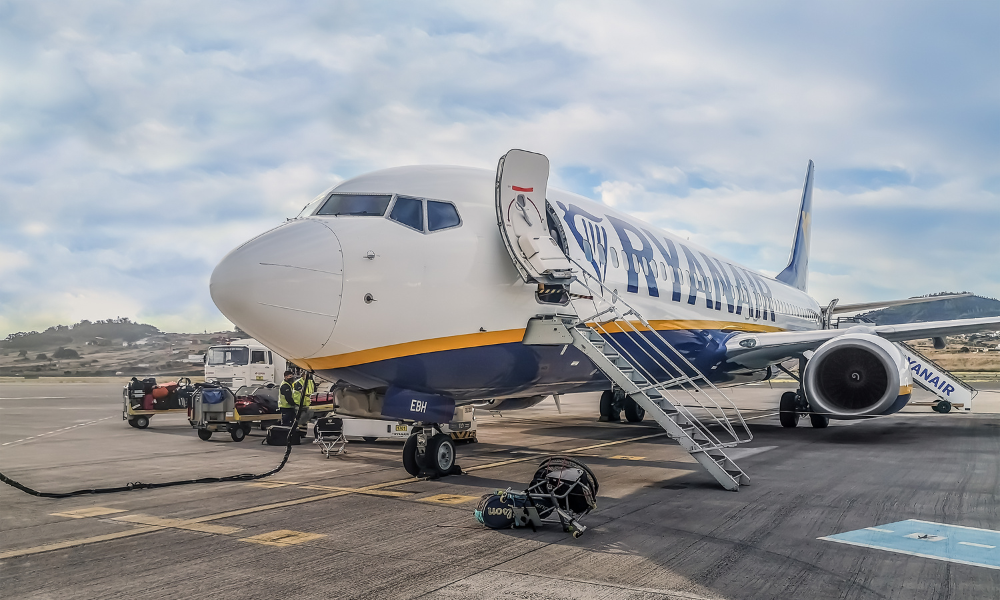
Anyone flying on vacation in 2026 should whip out the tape measure before departure. Budget airlines like Ryanair and Eurowings are drastically tightening their checks. A small overhang on the wheels or a backpack stuffed too full is now more expensive than ever. We show you what you need to watch out for regarding the 2026 hand luggage regulations.
The nightmare of every traveler usually begins shortly before boarding: Ground staff ask you to press your suitcase into the notorious metal frame – the so-called "sizer." If it doesn’t fit inside, the credit card has to come out. What used to be handled with leniency has become a strict rule in the travel year 2026. Airlines are fighting for every centimeter of storage space and utilizing excess baggage as a lucrative source of income.
The New Hardships: Why 3 Centimeters Decide
Passengers traveling on the cheapest basic fare, in particular, often fall into the cost trap. While airlines often haven't fundamentally changed their Hand Luggage Regulations 2026 on paper, the enforcement of the rules is stricter than ever before.
The reason is simple: Punctuality and profit. Overfilled overhead bins (luggage compartments) lead to delays during boarding. To prevent this – and simultaneously generate additional revenue – employees at the gate are now looking very closely. A suitcase that suddenly measures 58 cm instead of the allowed 55 cm (because the handle sticks out) counts as excess baggage.
The Yardstick Duel: The Exact Dimensions
The greatest confusion often surrounds the question: What is actually allowed on board? Here, a strict distinction must be made between "small hand luggage" (for under the front seat) and "large hand luggage" (for the overhead compartment).
Here are the critical limits you need to know to avoid a fine:
- The large carry-on (often subject to a charge): The standard for many airlines is [missing in original]. But be careful: Some budget airlines only accept 20 cm in depth. Anyone who doesn't measure exactly here will lose out.
- The small carry-on (Underseat): Here it gets particularly tricky. While some airlines allow [missing in original], others (like Ryanair with [missing in original]) are very specific about the shape.
A backpack that meets the dimensions when loosely packed, but swells to 25 cm in depth when stuffed full, no longer fits into the testing device. The result: It has to go into the cargo hold – for a hefty fee.
Suitable Luggage Solutions from Hauptstadtkoffer
So you don’t break into a sweat at the gate, we’ve selected suitable models from the Berlin-based brand Hauptstadtkoffer that are specifically designed for these strict dimensions:
Many hard-shell suitcases are standardly 23 cm deep—which is often too much for Ryanair.
- Recommendation: The “Spree” or “Suitline” model (pay close attention to the exact depth!). The Hauptstadtkoffer Spree in the cabin-size version (55 x 35 x 20 cm) is a lifesaver here. With exactly 20 cm depth, it glides into even the strictest Ryanair or Condor sizers without having to be squeezed.
The “Underseat” King (the free small carry-on)
For the small item that must fit under the seat in front (40 x 20 x 30 cm), a hard shell is hardly suitable.
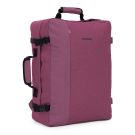
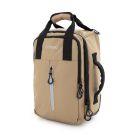
- Recommendation: The BLNBAG M6 and M7. These backpacks, with dimensions of 40 x 20 x 25 cm, are virtually tailor-made for the “small bag” requirements of Ryanair and Wizz Air. Because they are soft, they can be stowed well in the footwell and make maximum use of space without triggering oversized baggage fees Ot.
Where a bit more space is allowed (55 x 40 x 23 cm), you shouldn’t give up a single centimeter.
- Recommendation: The Hauptstadtkoffer “Mitte” (55 x 40 x 23 cm). This model fully exploits the more generous dimensions of airlines such as Eurowings or Lufthansa. Thanks to the robust hard shell, your luggage stays protected, and you don’t waste any valuable storage space.
An Expensive Wake-Up Call at the Gate
The days when you could get waved through with a smile are over. Anyone caught at the gate pays the maximum rates. With airlines like Ryanair or Eurowings, these fees vary depending on route and booking class, but they can quickly reach dizzying heights.
If your bag is rejected as too large, you must check it in as hold luggage. Because this happens at the gate (last minute), fees of between €46 and up to €80 are often charged. This is not uncommon to be more than the actual flight ticket cost.
Pro Tips: How to Protect Yourself from Being Ripped Off
To ensure a relaxed start to your vacation, you should keep the following points in mind:
- Measure your suitcase—including wheels and handles: Don’t rely on the manufacturer’s specifications. Measure it yourself at home. Airlines count every millimeter that sticks out.
- Book priority: If you know you’re carrying a lot, book large carry-on baggage online in advance. This usually costs only a fraction of the fee charged at the gate.
Conclusion: The 2026 carry-on baggage regulations require discipline and the right equipment. With a suitable suitcase like the “Spree” or the “BLNBAG,” you can save yourself the hassle—and the money for your first cocktail on the beach.
For further information go to: Gepäckguide/Ryanair
FAQ – Hand Luggage Regulations 2026
The free small hand luggage at Ryanair must not exceed 40 x 20 x 30 cm. It is mandatory that it fits under the seat in front of you. If the bag is larger, a fee will be charged at the gate.
If your suitcase does not fit in the "sizer" (measuring frame), you must check it in at the gate as hold luggage. Depending on the airline and route, this costs between 46 Euros and up to 80 Euros.
Many standard trolleys are 23 cm deep. However, Ryanair often only allows a depth of 20 cm for the Priority fare (55 x 40 x 20 cm). These 3 cm of excess can lead to the suitcase being rejected.
We recommend models with exactly 20 cm depth, such as the Hauptstadtkoffer "Spree" (55 x 35 x 20 cm). Standard hard-shell suitcases with 23 cm depth often do not fit into the strict Ryanair sizer.
Eurowings is somewhat more lenient with large hand luggage (55 x 40 x 23 cm). The small hand luggage (underseat) can be up to 40 x 30 x 25 cm here.
That is risky because they cannot be squeezed to fit. Soft backpacks like the BLNBAG (40 x 25 x 20 cm), which flexibly utilize the space under the front seat, are better suited.
Be sure to measure at home (including wheels and handles!), book "Priority" directly online if you have a lot of luggage, and use perfectly fitting luggage from manufacturers like Hauptstadtkoffer.