



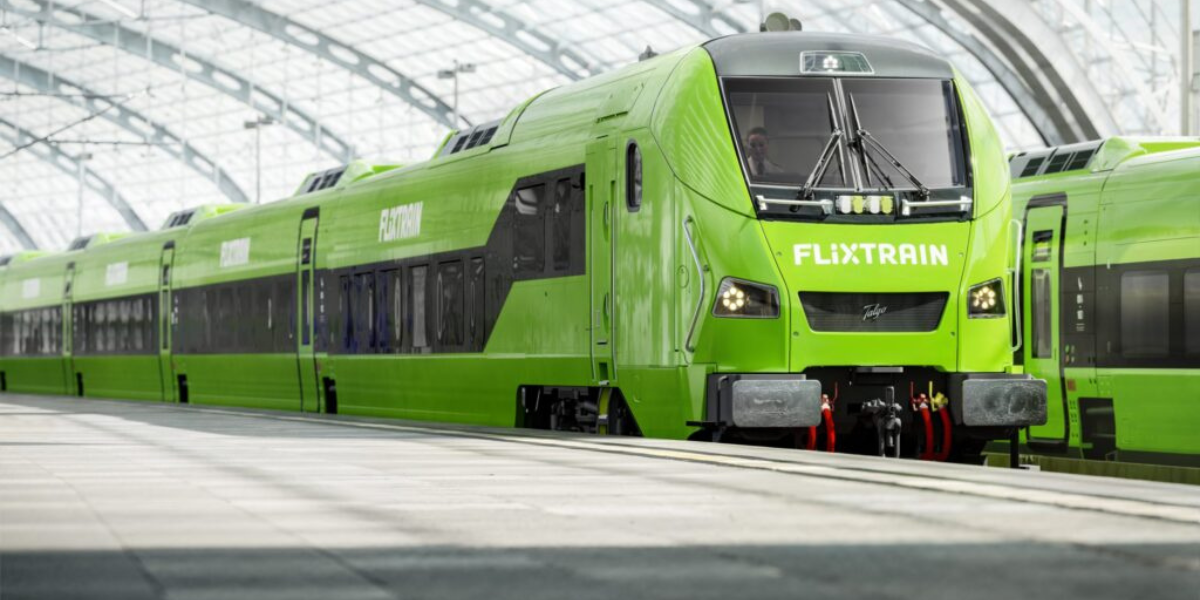
lixtrain 2025: New High-Speed Trains as an Affordable ICE Alternative
Investing in the Future of Long-Distance Travel
Flixtrain is setting a new course in 2025. The company, which emerged from the success story of Flixbus, aims to compete more strongly with Deutsche Bahn in Germany’s long-distance travel sector – and is introducing a completely new concept.
So far, about a dozen green Flixtrain trains run across Germany. But founder André Schwämmlein has announced plans to invest up to €2.4 billion in 65 new high-speed trains. This will make Flixtrain a cost-effective yet reliable alternative to ICE.
Flixtrain vs. Deutsche Bahn: Price, Comfort, and Seat Guarantee
While the railway market has been dominated for decades, Flixtrain pursues a different approach:
- Affordable prices for all travelers
- Clear structure without unnecessary luxury
- Seat guarantee for every passenger
The goal is to reduce delays, make better use of capacity, and noticeably increase passenger comfort. With this, Flixtrain positions itself in 2025 as a true alternative to Deutsche Bahn in long-distance travel.
Features of the New Flixtrain Fleet
A controversial but consistent step: Flixtrain introduces fees for large suitcases. Small bags, backpacks, and laptops will remain free of charge.
- Large suitcases = surcharge
- Small bags = free
- Hand luggage remains straightforward
The reasoning: Large pieces of luggage take up storage space and slow down boarding and exiting. With the new regulation, Flixtrain aligns itself with airlines like Ryanair – ensuring transparency and fairness.
Flixtrain 2025 in Competition: Challenges, Expansion, and Benefits for Travelers
Despite ambitious plans, Flixtrain faces tough conditions in Germany. A central problem is the high track access charges: Germany ranks among the most expensive in Europe for rail infrastructure. Another issue is the lack of integration into DB Navigator, the country’s most important ticketing app. Although developed with taxpayers’ money, Flixtrain tickets are still not listed there. The company therefore speaks of unfair competition and demands equal conditions so that travelers truly have an alternative to Deutsche Bahn trains.
While Flixtrain is specifically expanding its German market, its parent company Flixbus continues to grow worldwide. In addition to Europe, the company is now active in the USA, India, Australia, Chile, Mexico, Peru, and Brazil. Nevertheless, Europe remains the core project. By entering the high-speed train sector, Flixtrain aims to win long-term market share, strengthen competition, and shape the future of rail travel in Germany.
The conclusion is clear: With new high-speed trains, transparent ticket pricing, and a seat guarantee, Flixtrain shows that modern long-distance travel can work without luxury – offering more efficiency, fairness, and low prices. For passengers, the focus is above all on: affordable Flixtrain tickets, reliable travel, and a guaranteed seat.
FAQ – Flixtrain 2025
No. Flixtrain focuses on a uniform offer for all passengers in order to keep prices low and increase capacity.
Every passenger automatically receives a seat when purchasing a ticket. There will be no standing places in the aisle or on the floor.
Large suitcases slow down boarding and exiting and take up more space. That’s why Flixtrain charges a fee – small bags remain free of charge.
Yes. Flixtrain is priced below Deutsche Bahn and deliberately offers simple, transparent fares.
Production is underway, and from 2025 the trains will gradually be put into service. The entire fleet is expected to be modernized within a few years.
Yes, via vending machines. A classic dining car is not planned.
Flixtrain offers guaranteed seats, cheaper tickets, and a clear setup without first class. ICE offers more service and dining cars but is also more expensive.